Home / Dumpster Sizes
Dumpster sizes in Conroe run from 10 to 40 yards, and picking the right roll-off is the difference between one easy haul and paying for a second container or an overage fee. Here's exactly what each size holds, what it weighs, and which Conroe projects it fits, so you can order once and be done.
At a glance
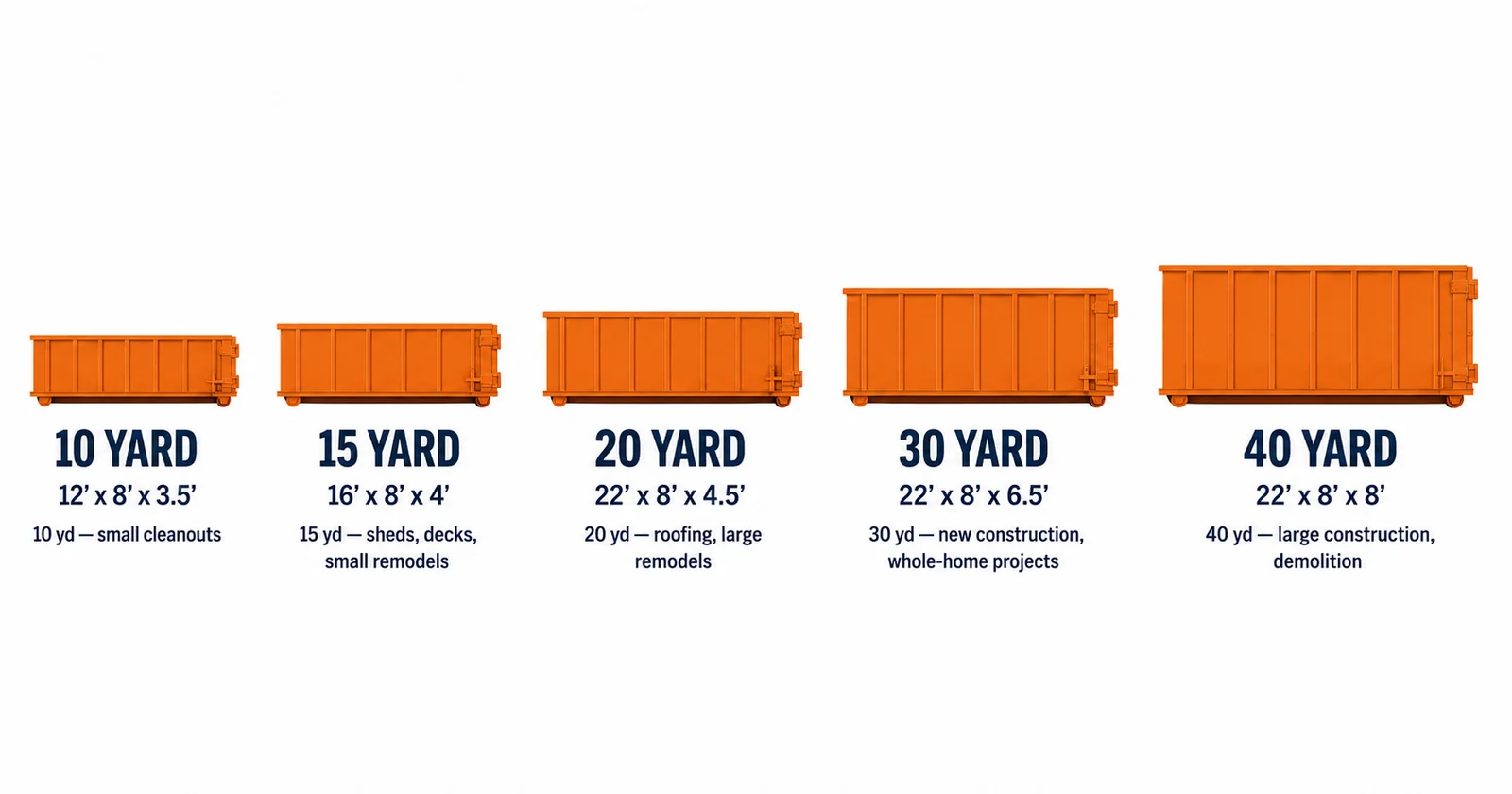
Every size is 8 feet wide, so the real difference is length and height, which is what changes how much fits and how much weight is included. Dimensions and included tonnage are typical local figures and are confirmed by your provider at booking.
| Size | Approx. dimensions | Holds about | Weight included | Best for |
|---|---|---|---|---|
| 10 yard | 12 x 8 x 3.5 ft | 3 to 4 pickup loads | 1 to 2 tons | Small reno, heavy debris |
| 15 yard | 16 x 8 x 4 ft | 4 to 5 pickup loads | 1.5 to 2.5 tons | Medium cleanout |
| 20 yard | 22 x 8 x 4.5 ft | 6 pickup loads | 2 to 3 tons | Most home projects |
| 30 yard | 22 x 8 x 6.5 ft | 9 pickup loads | 3 to 4 tons | Construction, big remodels |
| 40 yard | 22 x 8 x 8 ft | 12 pickup loads | 4 to 6 tons | Demolition, large builds |
Size by size
The 10-yard is the small, low-profile option, and it fits on a single-car driveway with room to spare. Because heavy material like concrete, brick, dirt, and roofing shingles hits the weight limit long before it fills the box, this is the size you want for those dense loads. A single bathroom remodel, a garage or shed cleanout, or a small landscaping tear-out all sit comfortably here.
Good fit: bathroom gut, garage purge, concrete or dirt in small amounts, small deck removal.
The 15-yard splits the difference when a 10 feels tight but a 20 is more than you need. It's a common pick for flooring tear-outs, a medium whole-room cleanout, or clearing out an estate one room at a time. You get a bit more volume without jumping to the larger footprint.
Good fit: flooring removal, medium cleanout, deck teardown, mixed household junk.
If you're not sure, this is usually the answer. The 20-yard is the workhorse of Conroe home projects because it handles a surprising amount of debris while still fitting most driveways. A full roof tear-off on an average house, a whole-room remodel, or a big garage-plus-attic cleanout all land in this range. It's the size most local providers deliver most often.
Good fit: roof tear-off, kitchen or full-room remodel, large cleanout, moving purge.
The 30-yard is where residential ends and construction begins. Its taller walls swallow bulky framing lumber, cabinets, drywall, and new-construction offcuts, which is why builders working the Lake Conroe growth corridor keep one on site. For a large home addition or a multi-room renovation, this is often the right call.
Good fit: new construction, large additions, whole-home renovation, commercial cleanout.
The 40-yard is the largest roll-off you can get, built for volume rather than weight. It shines on jobs that produce a lot of bulky but lightweight debris, like a full house demolition, a commercial tear-out, or a major build. Keep in mind it needs a good amount of flat, clear space for delivery and pickup.
Good fit: demolition, large commercial jobs, major construction, big bulky-debris cleanouts.
Don't get surprised
Every roll-off comes with an included weight allowance, measured in tons, on top of the flat rental price. Go over that limit and you pay a per-ton overage fee at the landfill scale. This is the single most common surprise on a dumpster bill, and it's easy to avoid.
The heavy-material rule: concrete, brick, dirt, tile, and roofing shingles are dense. A 10 or 15-yard container filled with them can hit its weight limit while it still looks half empty. For those materials, order a smaller box and don't overfill it. For light, bulky debris like furniture, cardboard, and framing, size up for the volume.
When you book, ask two questions: how much tonnage is included, and what the overage rate is per ton. A good local provider will tell you both up front, and can usually tell you from your project description whether you're likely to go over.
Before you fill it
Roll-offs take the large majority of construction debris, household junk, furniture, and yard waste. A handful of items are prohibited because they need special handling, and putting them in the container can lead to extra fees or a refused pickup. The exact list is confirmed by your provider, but it almost always includes:
If you're not sure about an item, ask before it goes in. Most of these have free or low-cost drop-off options through Montgomery County, and your provider can point you the right way.
Quick rule of thumb
The fastest way to get it right is to describe your project on a quick call. Tell us what you're clearing and your ZIP, and you'll get pointed to the right size and a flat, all-in price in a couple of minutes.
Once you have a size in mind, see what it costs locally. Home projects are covered on the residential rental page, jobsite and C&D loads on the commercial and construction page, and delivery runs across Conroe and five nearby towns. If the container has to sit on the street, check the permit rules first.
Good to know
Tell us your Conroe project and get matched to the right roll-off with a flat, same-day quote.
Call (346) 485-7076